Case study 1
The Reporting Server
An analytics platform for anti-money-laundering reporting, designed from the KPIs backwards.
- PM
- Architect
- Product
- Build
Project record
- Role
- PM · Architect · Product · Build
- When
- Sept to Oct 2026
- Status
- Live on fictional data
- Built with
- PostgreSQL, Python collectors, roles and permissions, Live Reporting Dashboards, Project Portal, Plans and Blueprints
The problem
I was interviewing for a bank's AML data program role and wanted to show, not tell, how I'd run it. AML reporting usually suffers from numbers nobody can trace and dashboards nobody trusts.
What I did
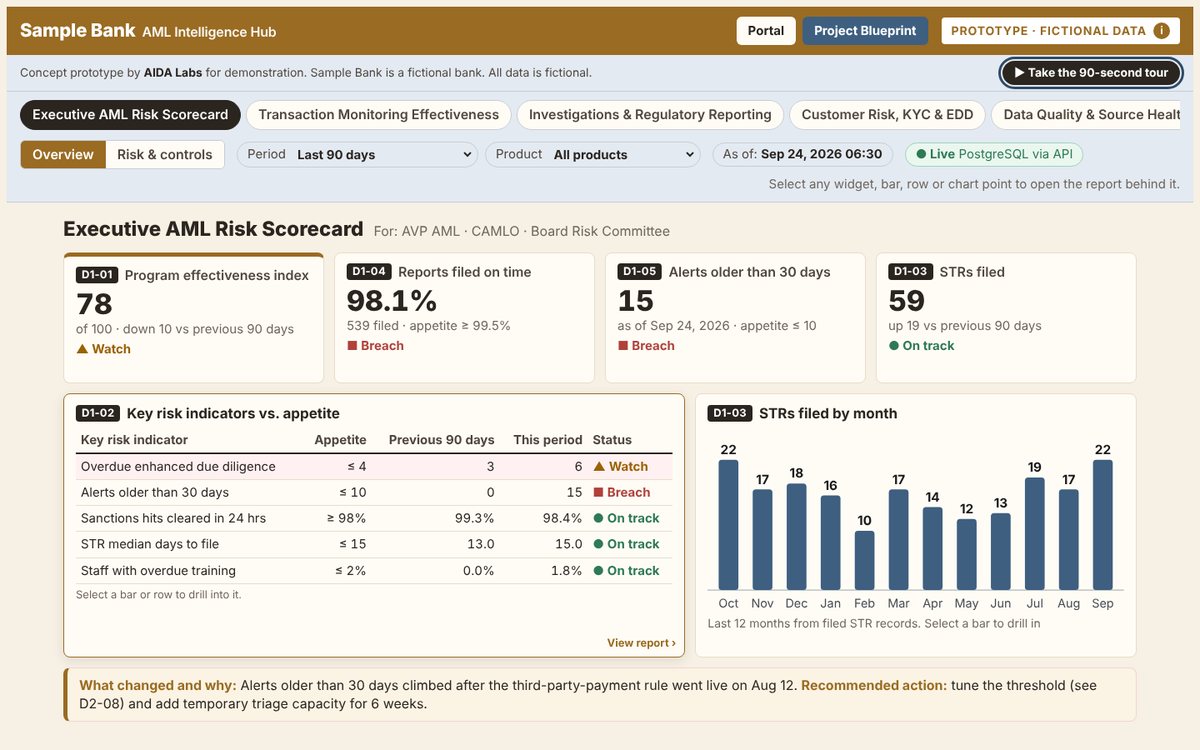
I started with the reporting needs and worked backwards. Each KPI got one SQL definition, a single source of truth that reaches back into the records, so every number is auditable. Under it sit a security layer (users, permission sets, custom views), a fast open-source database, and collectors that pull many formats from many sources into one clean model.
What shipped
Five role-based dashboards and 50 KPIs on a fictional Sample Bank, a full project plan and blueprint for the rollout, and a branded project portal holding it all.
What I learned
Designing reports first saves weeks of rework. And the same server can report on anything, not just AML: it became the Live Reporting Dashboards in my Toolkit.
Open it live
See it running, or read the plan I worked from.